
A Dual Justification for the Free Society:

By Edward W. Younkins
July 20, 2025
SUBSCRIBE TO SAVVY STREET (It's Free)
Sowell’s Constrained Vision and Den Uyl and Rasmussen’s Ethics of Responsibility
Introduction
The moral, psychological, and philosophical foundations of a free society have long been debated. Classical liberals and libertarians have typically justified limited government and individual liberty on utilitarian, rights-based, or economic grounds. Yet, a deeper inquiry into the nature of man and society offers another layer of justification—one rooted in anthropological and ethical understandings of the human condition. Two major but often unconnected streams of thought exemplify this approach: Thomas Sowell’s constrained vision of man and society as articulated in his 1986 book, A Conflict of Visions, and Douglas J. Den Uyl and Douglas B. Rasmussen’s ethics of responsibility, as developed in their 2016 work, The Perfectionist Turn.
In A Conflict of Visions, Sowell discusses two conflicting visions of man and the world. In the constrained vision, which he champions, man’s nature is essentially unchanging: flawed, self-interested, and limited in knowledge, wisdom, virtue, and in the capacity to perfect society. Skeptical of man’s ability to reason society’s way to perfection, Sowell extols the wisdom of the ages as found in systemic processes such as markets and the rule of law. The unconstrained vision, by contrast, sees human beings as highly malleable and perfectible. Human nature is essentially good, and the best and the brightest are capable of creating the right kinds of institutions for an ideal society. Those holding an unconstrained vision distrust decentralized processes and believe that redistribution is required to achieve justice.
Sowell’s constrained vision is rooted in the idea that human beings are not infinitely malleable or perfectible. Instead, individuals operate within the constraints of their own limitations, knowledge, and circumstances. This perspective is associated with thinkers such as Adam Smith, Thomas Hobbes, Alexander Hamilton, Edmund Burke, Oliver Wendell Holmes, and Friedrich Hayek, The constrained vision prioritizes the development of institutions that account for human frailty, rather than relying on the benevolence or altruism of individuals.
In The Perfectionist Turn, Den Uyl and Rasmussen advocate for an aspirational ethics of responsibility and against an ethics of respect. They focus on an individual’s obligation to strive for his own self-directed flourishing. Each individual is responsible for making choices and taking actions to promote his well-being. On the other hand, an ethics of respect is concerned with discovering and fulfilling duties, universal principles, relationships among persons, inclusiveness, and tolerance. Den Uyl and Rasmussen defend responsibility as a core idea of their Individualistic Perfectionism.
Den Uyl and Rasmussen’s ethics of responsibility is grounded in a neo-Aristotelian framework, which recognizes human beings as having a unique potential for rational thought and decision-making. This perspective emphasizes the importance of cultivating virtues and moral character. By focusing on individual responsibility this approach encourages individuals to flourish by attempting to reach their full potential.
At first glance, these perspectives may seem opposing, with Sowell’s tragic anthropology at odds with Den Uyl and Rasmussen’s teleological ethics.
At first glance, these perspectives may seem opposing, with Sowell’s tragic anthropology at odds with Den Uyl and Rasmussen’s teleological ethics. While Sowell emphasizes the limits of human knowledge and the importance of social processes that emerge from constrained human capacities, Den Uyl and Rasmussen emphasize the open-endedness of human flourishing and the ethical necessity of political liberty as a framework for the exercise of moral agency.
Upon closer examination, however, their views are not only compatible but mutually reinforcing, and they reveal complementary philosophical ways of justifying the appropriateness of a libertarian society. Thus, this essay will argue that together they provide a dual justification for a free or libertarian society: one rooted in epistemic humility and social realism, and the other in a virtue-ethics framework that sees liberty as a necessary context for human flourishing.
Thomas Sowell’s Constrained Vision of Man and Society
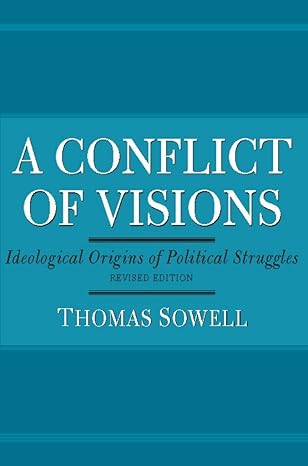 Although Thomas Sowell is rarely referred to as a philosopher, his writings contain a consistent philosophical perspective. His views are compatible with those of Aristotle, at least with respect to grounding metaphysics on that which is instantiated in the real mind-independent world. His induction-first, pragmatic method favors adherence to tangible measurements in the real world.
Sowell’s constrained vision portrays human nature as fixed, fallible, and self-interested. Human beings are inherently limited in knowledge, virtue, and benevolence. These limitations are not merely circumstantial but inherent to human nature. The constrained vision assumes that the fundamental problems of human life—scarcity, conflict, and moral imperfection—are not fully solvable but must be managed through evolved institutions, processes, and incentives.
This vision holds that no individual or group possesses enough knowledge or goodness to plan society. Thus, rather than trusting in reasoned blueprints or idealistic schemes, the constrained vision emphasizes the importance of systemic processes such as tradition, rule of law, markets, and decentralized decision-making. Social outcomes are the result of trade-offs, not solutions.
In Sowell’s view, liberty is not the product of idealistic yearnings for freedom but a byproduct of institutional arrangements that emerge from constrained human capacities. Free markets, for example, coordinate dispersed knowledge and align self-interest with social benefit. Constitutional government limits the power of rulers because no one can be trusted with unchecked authority. These arrangements protect liberty precisely because they account for the flaws of human nature.
Sowell’s constrained vision entails a kind of moral epistemology—we cannot expect moral or political wisdom to reside in a single mind or generation. The knowledge embedded in customs, markets, and legal traditions exceeds what anyone can consciously design. From this standpoint, moral humility demands a cautious approach to power and reform.
Den Uyl and Rasmussen’s Ethics of Responsibility
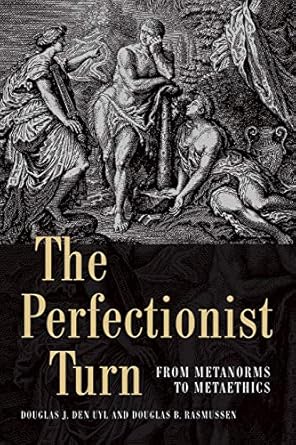 In The Perfectionist Turn, Douglas J. Den Uyl and Douglas B. Rasmussen advance a neo-Aristotelian ethical framework that centers on the idea of individual flourishing or perfection. Their goal is to develop an ethics that respects the complexity and individuality of human lives, while grounding a political philosophy of liberty in a broader moral context.
Den Uyl and Rasmussen argue that flourishing is agent-relative—it is the self-directed, life-long project of developing one’s distinct human potential. While flourishing is objective in the sense that it refers to real human goods (e.g., reason, creativity, friendship), it is not one-size-fits-all. Flourishing cannot be achieved by decree or central planning—it requires autonomous moral agency. Casting the entrepreneur as “moral exemplar,” they emphasize traits like creativity, judgment under uncertainty, and adaptability.
Unlike Kantian deontology or utilitarian aggregation, this ethics emphasizes responsibility for one’s own life. The self is not a passive recipient of external values but an active agent in shaping a morally meaningful life. This emphasis on responsibility parallels Sowell’s focus on constraints—both deny the feasibility of utopian schemes to perfect humanity.
What distinguishes Den Uyl and Rasmussen’s perfectionist ethics is their insistence that liberty is a political condition required by the nature of moral agency. They argue that human flourishing, being self-directed, requires a political order that refrains from imposing comprehensive moral ends. Thus, liberty is not a mere instrumental good, nor a preference—it is a metanormative condition that allows diverse moral lives to flourish.
This view leads to their idea of liberalism as a framework for metanorms—that is, a liberal society does not enforce moral outcomes but upholds the structures (such as property, consent, and law) that allow moral responsibility to be exercised. Here, liberty is justified not as an economic expedient but as a moral requirement of ethical pluralism.
Complementarity of the Two Perspectives
Though arising from different philosophical traditions—Sowell’s constrained vision from social epistemology and tragic realism, and Den Uyl and Rasmussen’s ethics from Aristotelian perfectionism—their frameworks are complementary in both diagnosis and prescription.
Both approaches recognize the limits of human knowledge and the dangers of centralized power.
Both approaches recognize the limits of human knowledge and the dangers of centralized power. Sowell emphasizes epistemic limitations, while Den Uyl and Rasmussen emphasize ethical pluralism. Both reject the idea that a single moral or political authority can rightly prescribe the good life for others. This shared recognition supports institutional humility and the prioritization of liberty.
For Sowell, liberty functions as a safety valve against the hubris of reformers; for Den Uyl and Rasmussen, liberty is the structural recognition that individuals must take responsibility for their own flourishing. In both cases, liberty arises not from optimism but from realism—about human nature, morality, and knowledge.
Both frameworks also endorse liberty as a solution to coordination problems.
Both frameworks also endorse liberty as a solution to coordination problems. Sowell sees markets, traditions, and legal rules as mechanisms for aggregating dispersed knowledge and aligning incentives. Den Uyl and Rasmussen view liberty as the only framework in which diverse, agent-relative forms of flourishing can coexist peacefully.
From these perspectives, liberty is not just a value—it is a processual condition that enables society to function given the constraints of human life. Sowell explains the functional benefits; Den Uyl and Rasmussen justify it normatively.
Sowell’s critique of the unconstrained vision—that human nature is malleable, perfectible, and morally pristine—finds an echo in Den Uyl and Rasmussen’s rejection of the ethics of respect. Both oppose visions that assume someone else can define or deliver the good life on behalf of others.
Indeed, one of the central dangers in both accounts is moral central planning: whether through state action or intellectual imposition, the belief that the few can determine the flourishing of the many. The constrained vision and the perfectionist ethics both resist this by championing individual autonomy grounded in moral responsibility.
Sowell’s constrained vision provides a realistic account of human nature, while Den Uyl and Rasmussen’s ethics of responsibility offers a normative framework for individual action. By acknowledging the limitations of human nature, individuals can strive for moral excellence and take responsibility for their choices.
Sowell’s constrained vision acknowledges human frailty while Den Uyl and Rasmussen’s ethics of responsibility emphasizes the importance of moral agency. By recognizing human limitations, individuals can take responsibility for their choices and strive for moral excellence, despite their flaws.
Points of Tension and Philosophical Difference
Sowell largely eschews metaphysical claims about human nature in favor of empirical generalizations. His arguments are grounded in social theory, economics, and historical observation, rather than normative ethics or philosophical anthropology.
Den Uyl and Rasmussen, by contrast, make strong metaphysical claims about human nature, teleology, and natural ends. They maintain that flourishing is rooted in what humans are by nature. Sowell would likely view such arguments with skepticism, as prone to overreach or idealism.
Yet this difference in philosophical style may be more complementary than contradictory. Sowell provides a cautionary realism that tempers ethical overreach; Den Uyl and Rasmussen provide a moral architecture that gives liberty more than instrumental value.
Sowell’s justification for liberty is primarily pragmatic and systemic—liberty works better than alternatives, given what people are like. Den Uyl and Rasmussen, on the other hand, argue that liberty is morally required for human beings to live ethically meaningful lives.
This means that their justifications may, in part, address different audiences—Sowell may persuade the more tragic realist while Den Uyl and Rasmussen may persuade the more optimistic realist. Taken together, they offer a double defense of liberty—one pragmatic, the other ethical.
The Convergence in Political Philosophy
Despite differences in method and emphasis, both Sowell and Den Uyl and Rasmussen converge on a political philosophy of limited government, individual rights, and decentralized decision-making. The ethics of responsibility emphasizes that individuals must take ownership of their lives within a context of freedom. This resonates with the constrained vision, which emphasizes the necessity of rules, incentives, and evolved institutions that guide behavior without assuming moral perfection.
Each framework acknowledges that social order emerges not from design but from interaction.
Each framework acknowledges that social order emerges not from design but from interaction. Whether through markets (Sowell) or through the moral exercise of agency (Den Uyl and Rasmussen), liberty facilitates the complex coordination required for society to function and for individuals to flourish.
Both reject the notion that liberty is context-dependent or culturally relative. For Sowell, attempts to engineer better societies by abandoning liberty have repeatedly led to disaster. For Den Uyl and Rasmussen, liberty is not a contingent good but a universal moral requirement rooted in the nature of human flourishing.
This convergence provides a unified case for a libertarian political order, understood not merely as a preference but as a rational response to both the limits of human nature and the requirements of human excellence.
Conclusion
Thomas Sowell’s constrained vision and Den Uyl and Rasmussen’s ethics of responsibility approach the defense of liberty from different directions—empirical versus normative, tragic versus aspirational, social epistemology versus perfectionist ethics. Yet, their insights are not merely compatible, they are mutually reinforcing.
Sowell reminds us that human beings are deeply limited, and that liberty protects us from the overreach of those who would presume to improve us by force. Den Uyl and Rasmussen remind us that flourishing is a deeply personal, agent-relative endeavor that requires liberty as its precondition. One guards against the hubris of power; the other affirms the dignity of personhood.
Together, they offer a powerful justification for a free or libertarian society: not as utopia, but as the best framework within which fallible, responsible, and aspiring human beings can live, work, and flourish. Libertarian institutions can simultaneously accommodate limited human capabilities and resources as well as moral agency.
Recommended Readings
Den Uyl, Douglas J., and Douglas B. Rasmussen. 2016. The Perfectionist Turn: From Metanorms to Metaethics. Edinburgh: Edinburgh University Press.
Rasmussen B. Douglas, and Douglas J. Den Uyl. 2005 Norms of Liberty: A Perfectionist Basis for Non-Perfectionist Politics. University Park: Pennsylvania State University Press.
Sowell, Thomas. 1980. Knowledge and Decisions. New York: Basic Books.
_____. 1987. A Conflict of Visions: Ideological Origins of Political Struggles. New York: William Morrow.

-

O Catalonia! O Gaza! Political Romanticism Rolls On
-

Book Review: Dictators and Disinformation by Jay Friedenberg
-

The New Humanoid Workforce: When Labor Becomes Capital
-

Muddling Through—Until We Don’t
-

Part II: Can We Exorcise the Ghost from the AI Machine?
-

Can We Exorcise the Ghost from the AI Machine?
-

The Intimacy Marketplace Part II: The New Johns
-

The Intimacy Marketplace Part I: From Playboy to OnlyFans
-

Why Freer Governments Also Fear Crypto
-

Blockchain vs. Authoritarianism: A Global Clash for Liberty