
Robert Ingersoll on The Declaration of Independence
By Tom Malone
May 5, 2025
SUBSCRIBE TO SAVVY STREET (It's Free)
The following is an excerpt from the forthcoming book, The Portable Robert Ingersoll, available on May 5, 2025.
“One hundred years ago our fathers retired the gods from politics.”
—Robert G. Ingersoll, July 4, 1876
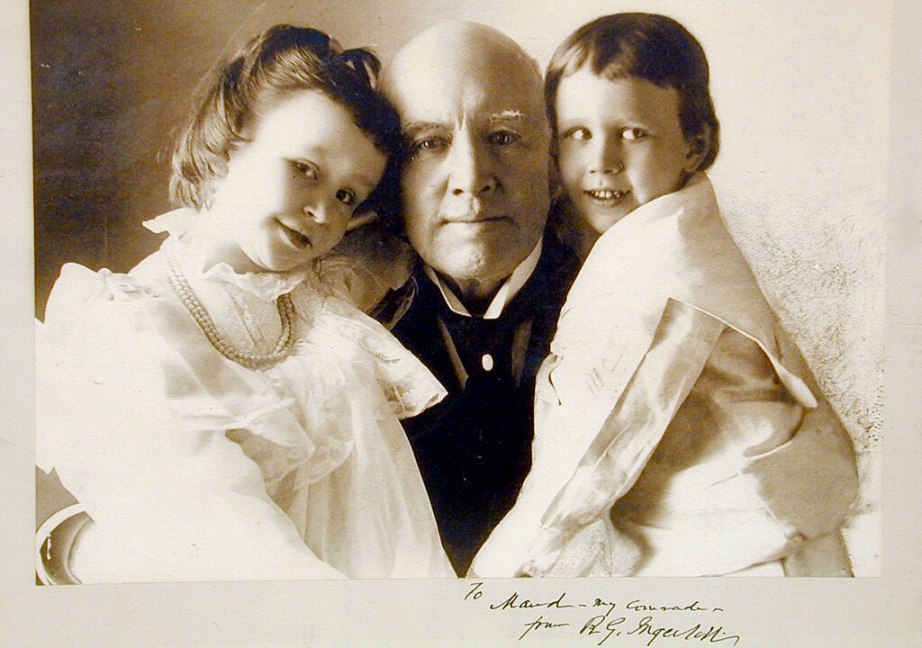
Colonel Robert G. Ingersoll (1833–1899) is perhaps the greatest unsung champion of liberty in American history. In the decades following the Civil War, he was the most electrifying speaker in the nation—reaching more Americans in person than any figure before the age of film or television. For over thirty years, he traversed the country by train, filling lecture halls and open fields alike, sometimes speaking to crowds as large as fifty thousand. He brought a message of reason, freedom, and individual dignity to nearly every town in the Union.
Colonel Robert G. Ingersoll (1833–1899) is perhaps the greatest unsung champion of liberty in American history.
Ingersoll’s oratory was unmatched. Shakespearean in style and clarity, he spoke for hours without notes, delivering spontaneous, philosophically rich speeches on subjects ranging from science and politics to art, religion, and individual rights. He praised the thinkers who advanced human liberty—Voltaire, Paine, Lincoln, Humboldt, Tolstoy—and brought their ideals to life for a postwar generation grappling with the meaning of freedom.
He was revered by the best minds of his time. Thomas Edison called him “the finest personality that ever existed.”
He was revered by the best minds of his time. Thomas Edison called him “the finest personality that ever existed.” Mark Twain described his words as “the supreme combination . . . ever put together since the world began” and declared, “Of all men living or dead, I love Ingersoll most.” Frederick Douglass said only two men ever made him feel small—Lincoln and Ingersoll. Oscar Wilde called him the most intelligent American alive. He drank scotch with Andrew Carnegie and was the close friend and eulogist of Walt Whitman.
And yet today, Ingersoll is nearly erased from public memory.
Why? Because he doesn’t fit the boxes modern politics demands. The left discards him because he was a proud Republican who defended capitalism and individual rights. The right disowns him because he was a fearless atheist who championed reason over revelation. In a culture increasingly allergic to moral clarity, Ingersoll’s unapologetic defense of secular liberty makes both camps uncomfortable.
But for those who hold reason, individualism, and freedom as sacred values—in the tradition of Locke, Jefferson, Rand, and Paine—Robert Ingersoll is not a relic of the past. He is a voice for the future. Unlike other “progressive” freethinkers of his era, he did not fall into the trap of replacing one authoritarian system with another by throwing off the chains of the Church only to don the chains of the State. He was anchored in the classical liberal tradition of the Enlightenment—but without the remnants of mysticism.
Although most of his popularity stemmed from his lectures opposing Christianity and fundamentalist interpretations of the Bible, he also frequently spoke on politics and American history. Ingersoll is relevant today because he provides a role model for what might be called the liberal or “rational right.” Although he was known as “The Great Agnostic,” he was an impassioned patriot and early member of the newly formed Republican party under Lincoln. He campaigned for every winning Republican presidential candidate from 1876 to 1899. One of his most remarkable political lectures was his “Centennial Oration,” delivered on July 4, 1876, which I’ve excerpted here.
From “Centennial Oration” by Robert Ingersoll
 One hundred years ago our fathers retired the gods from politics.
The Declaration of Independence is the grandest, the bravest, and the profoundest political document that was ever signed by the representatives of a people. It is the embodiment of physical and moral courage and of political wisdom.
I say of physical courage, because it was a declaration of war against the most powerful nation then on the globe; a declaration of war by thirteen weak, unorganized colonies; a declaration of war by a few people, without military stores, without wealth, without strength, against the most powerful kingdom on the earth; a declaration of war made when the British navy, at that day the mistress of every sea, was hovering along the coast of America, looking after defenceless towns and villages to ravage and destroy. It was made when thousands of English soldiers were upon our soil, and when the principal cities of America were in the substantial possession of the enemy. And so, I say, all things considered, it was the bravest political document ever signed by man.
…to declare that all men are created equal. With one blow, with one stroke of the pen, they struck down all the cruel, heartless barriers that aristocracy, that priestcraft, that kingcraft had raised between man and man.
And if it was physically brave, the moral courage of the document is almost infinitely beyond the physical. They had the courage not only, but they had the almost infinite wisdom, to declare that all men are created equal. With one blow, with one stroke of the pen, they struck down all the cruel, heartless barriers that aristocracy, that priestcraft, that kingcraft had raised between man and man. They struck down with one immortal blow that infamous spirit of caste that makes a god almost a beast, and a beast almost a god. With one word, with one blow, they wiped away and utterly destroyed all that had been done by centuries of war—centuries of hypocrisy—centuries of injustice.
What more did they do? They then declared that each man has a right to live. And what does that mean? It means that he has the right to make his living. It means that he has the right to breathe the air, to work the land, that he stands the equal of every other human being beneath the shining stars; entitled to the product of his labor—the labor of his hand and of his brain. What more? That every man has the right to pursue his own happiness in his own way. Grander words than these have never been spoken by man. And what more did these men say? They laid down the doctrine that governments were instituted among men for the purpose of preserving the rights of the people.
Our fathers founded the first secular government that was ever founded in this world.
Our fathers founded the first secular government that was ever founded in this world. Recollect that. The first secular government; the first government that said every church has exactly the same rights and no more; every religion has the same rights, and no more. In other words, our fathers were the first men who had the sense, had the genius, to know that no church should be allowed to have a sword; that it should be allowed only to exert its moral influence.
You might as well have a government united by force with Art, or with Poetry, or with Oratory, as with Religion. Religion should have the influence upon mankind that its goodness, that its morality, its justice, its charity, its reason, and its argument give it, and no more. Religion should have the effect upon mankind that it necessarily has, and no more. The religion that has to be supported by law is without value, not only, but a fraud and curse. The religious argument that has to be supported by a musket, is hardly worth making. A prayer that must have a cannon behind it, better never be uttered. Forgiveness ought not to go in partnership with shot and shell. Love need not carry knives and revolvers.
And the next thing they said, was, “We will be free men; we are weary of being colonists; we are tired of being subjects; we are men; and these colonies ought to be states; and these states ought to be a nation; and that nation ought to drive the last British soldier into the sea.” And so they signed that brave Declaration of Independence. I thank every one of them from the bottom of my heart for signing that sublime declaration. I thank them for their courage—for their patriotism—for their wisdom—for the splendid confidence in themselves and in the human race.
They signed that Declaration of Independence, although they knew that it would produce a long, terrible, and bloody war. They looked forward and saw poverty, deprivation, gloom, and death. But they also saw, on the wrecked clouds of war, the beautiful bow of freedom.
These grand men were enthusiasts; and the world has been raised only by enthusiasts. In every country there have been a few who have given a national aspiration to the people. The enthusiasts of 1776 were the builders and framers of this great and splendid Government; and they were the men who saw, although others did not, the golden fringe of the mantle of glory that will finally cover this world. They knew, they felt, they believed that they would give a new constellation to the political heavens—that they would make the Americans a grand people—grand as the continent upon which they lived.
I will not name any of the grand men who fought for liberty. All should be named, or none. I feel that the unknown soldier who was shot down without even his name being remembered—who was included only in a report of “a hundred killed,” or “a hundred missing,” nobody knowing even the number that attached to his august corpse—is entitled to as deep and heartfelt thanks as the titled leader who fell at the head of the host. Standing here amid the sacred memories of the first, on the golden threshold of the second, I ask, Will the second century be as grand as the first? I believe it will, because we are growing more and more humane. I believe there is more human kindness, more real, sweet human sympathy, a greater desire to help one another, in the United States, than in all the world besides. We must progress. We are just at the commencement of invention. The steam engine—the telegraph—these are but the toys with which science has been amused. Wait; there will be grander things, there will be wider and higher culture—a grander standard of character, of literature and art.
Besides all this, I believe the people are nearer honest than ever before. A few years ago we were willing to live upon the labor of four million slaves. Was that honest? At last, we have a national conscience. At last, we have carried out the Declaration of Independence. Our fathers wrote it—we have accomplished it. The black man was a slave—we made him a citizen. We found four million human beings in manacles, and now the hands of a race are held up in the free air without a chain. I have had the supreme pleasure of seeing a man—once a slave—sitting in the seat of his former master in the Congress of the United States. I have had that pleasure, and when I saw it my eyes were filled with tears. I felt that we had carried out the Declaration of Independence—that we had given reality to it, and breathed the breath of life into its every word.
Remember that all men have equal rights. Remember that the man who acts best his part—who loves his friends the best—is most willing to help others—truest to the discharge of obligation—who has the best heart—the most feeling—the deepest sympathies—and who freely gives to others the rights that he claims for himself is the best man. I am willing to swear to this. What has made this country? I say again, liberty and labor. What would we be without labor? I want every farmer when plowing the rustling corn of June—while mowing in the perfumed fields—to feel that he is adding to the wealth and glory of the United States. I want every mechanic—every man of toil, to know and feel that he is keeping the cars running, the telegraph wires in the air; that he is making the statues and painting the pictures; that he is writing and printing the books; that he is helping to fill the world with honor, with happiness, with love and law.
Our country is founded upon the dignity of labor—upon the equality of man. Ours is the first real Republic in the history of the world. Beneath our flag the people are free. We have retired the gods from politics. We have found that man is the only source of political power, and that the governed should govern. We have disfranchised the aristocrats of the air and have given one country to mankind.
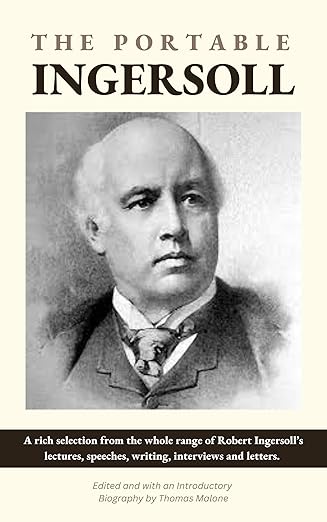
The above has been excerpted from The Portable Robert Ingersoll, an anthology of the best lectures and speeches of Robert Ingersoll, edited by Tom Malone. Tom is a contributor to The Objective Standard and The Gateway Pundit, among other publications, and author of several biographical portraits of figures such as Dr. Joseph Warren, Robert Ingersoll, Henry Hazlitt, John Quincy Adams, and Giordano Bruno. For more information on Tom’s writing and activities, please visit: www.tjmalone.com

-

The New Humanoid Workforce: When Labor Becomes Capital
-

Muddling Through—Until We Don’t
-

Part II: Can We Exorcise the Ghost from the AI Machine?
-

Can We Exorcise the Ghost from the AI Machine?
-

The Intimacy Marketplace Part II: The New Johns
-

The Intimacy Marketplace Part I: From Playboy to OnlyFans
-

Why Freer Governments Also Fear Crypto
-

Blockchain vs. Authoritarianism: A Global Clash for Liberty
-

Human Horticulture—a Missing Link for Objectivism?
-

Healthcare: A System That Rewards Compliance Not Patient Care