
O Catalonia! O Gaza! Political Romanticism Rolls On
By Walter Donway
October 20, 2026
SUBSCRIBE TO SAVVY STREET (It's Free)
One is sorely tempted to say: The buggers never forget and never get it straight. The Spanish Civil War (1936–1939) has been memorialized in popular imagination as a tragic, idealistic struggle of democracy against dictatorship. The narrative persists. A recent segment on Spanish cuisine had a pretty reporter visiting a Spanish chef and his family, and, between courses, the talk turned from praise of food to praise of the good people who fought for the Republican Popular Front government against the Nationalist forces of Francisco Franco.
The real history of the Spanish Civil War turns out to be the real precedent for Gaza.
No one today seriously idolizes Franco’s authoritarian regime. Yet the myth of good versus evil ignores the realities of the conflict—realities about what was truly at stake in Spain and the nature of the forces on both sides.
The Magnet of Idealism
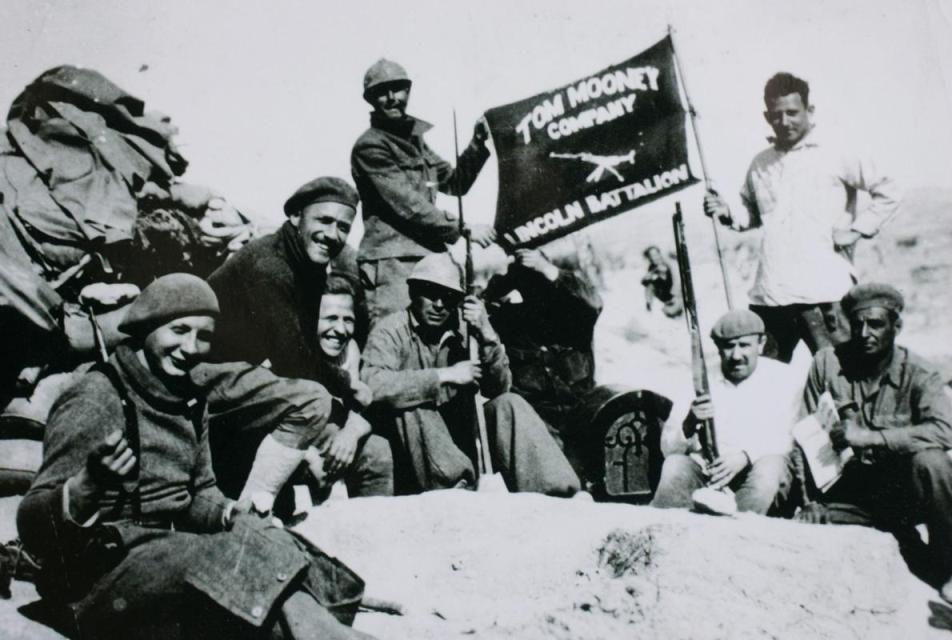
The Spanish Civil War electrified international sympathizers—writers like Ernest Hemingway, George Orwell, and thousands of young men and women who joined the International Brigades. They believed they were fighting for freedom and democracy (the Spanish Republic) against fascism (the Nationalists), seeing Spain as the front line in a global war against rising tyranny.
Stalin’s agents flooded into Spain, bringing arms, money, political advisors, and an ideological agenda.
Some did not know, others chose not to learn, and some never figured out that the real history of the Spanish Civil War turns out to be the real precedent for Gaza. Stalin’s agents flooded into Spain, bringing arms, money, political advisors, and an ideological agenda.
The price: Soviet control over Spain’s internal security, financial reserves, and political direction. In October 1936, the Republic shipped 510 metric tons of Spain’s gold reserves—about 72% of its total gold, valued at $500 million then, over $10 billion today—to Moscow. This “Moscow Gold” not only funded arms shipments but also gave Stalin leverage over the Republic’s survival.
Today’s pro-Palestinian demonstrations on the campuses of premier U.S. universities feature the same brand of romanticized idealism that once drew young Americans to fight in the Spanish Civil War.
By a kind of “iron law” of coalition politics, the Popular Front government—a fragile combination of liberals, socialists, anarchists, and communists—inevitably lost power to its most ruthless and disciplined faction: Soviet-aligned Stalinists. Stalin’s secret police, the NKVD, operated freely within Spain, arresting, torturing, and executing political opponents, including independent leftists like the anarchists and the Trotskyist POUM (Workers’ Party of Marxist Unification).
Today’s pro-Palestinian demonstrations on the campuses of premier U.S. universities feature the same brand of romanticized idealism that once drew young Americans to fight in the Spanish Civil War. Then, the Spanish Republic was idealized as a brave democracy resisting fascism; today, it is Gaza idealized as a helpless victim of Western-backed oppression that fuels sympathies of those chanting for “liberation” and “resistance.”
In both cases, noble-sounding causes concealed deeper, darker truths.
In both cases, noble-sounding causes concealed deeper, darker truths. In 1930s Spain, Stalinist operatives soon dominated the Republican cause, bent on eliminating rivals and establishing Soviet control on a Western European nation. In Gaza, the “resistance” lionized by Western sympathizers is not democratic, pluralistic, or freedom-loving, but rather an arm of the Islamist dictatorship in Iran. The romance of revolution, not to mention postmodernist historiography, is the acid dissolving moral clarity. The tragedy is that well-meaning idealists once again march in support of movements whose first victims are liberty, dissent, and truth.
George Orwell Here with Your Wake-up Call
George Orwell’s Homage to Catalonia is one of the few first-hand accounts that dispelled the romantic fog to reveal the internecine bloodletting within the ”anti-Franco” camp. Orwell described his ideological awakening: “The thing that had happened was not a ‘reaction,’ but a counter-revolution. The Communist Party was aiming at a centralised, authoritarian form of government, with the entire opposition crushed.”
Orwell had arrived in Barcelona at the end of 1936 and stayed for six months, 100 days of it on the Aragon front where he took a bullet in the throat that missed his carotid artery by a few millimeters. Orwell barely eluded arrest during the violent suppression of the POUM in the May Days of 1937 in Barcelona, when communist forces fought anarchists and anti-Stalinist leftists. He wrote: “It was the first time that I had seen armed men firing indiscriminately into crowds of unarmed civilians.”
After their hotel room was raided by plainclothes police, Orwell’s wife, Eileen, convinced Orwell that they had to get out. Fleeing Spain wounded and disillusioned, Orwell realized the great communist betrayal of the war he had believed in. Georges Kopp, his commander, was interrogated, tortured, and moved between prisons and detention camps for 18 months. His friend Bob Smillie died in jail.
Franco’s Reaction—but Against What?
Franco, a Spanish general, a Catholic, with monarchist sympathies, led a nationalist rebellion against the increasingly radicalized leftist Popular Front. Born in the port of Ferrol in northern Spain in 1892, coming from a long line of Navy men, he ended up in the infantry academy in Toledo. He rose through the ranks by virtue of fearlessness, professionalism, and ruthlessness, especially while serving in Morocco, and became the youngest general in Europe.
His cause was reactionary—defending Catholicism, private property, and national unity—but he was not in the mold of Hitler or Mussolini. His ideology was traditional military-authoritarian, not totalitarian fascist.
Franco accepted material aid from Nazi Germany and Fascist Italy (and volunteers from Germany, Italy, and Portugal) to fight against communism as the Popular Front accepted aid from the Soviet Union, but he kept a cautious distance from both regimes. After Hitler’s stunning victories early in World War II, Franco resisted joining the Axis powers, offering only token cooperation. Spain remained neutral throughout the war despite intense German pressure.
He said: “Hitler asked me for more than I could give and offered me less than I needed.” He also justified his domestic policies: “Our regime is based on authority, hierarchy, and responsibility. . . . It is not based on a liberal mockery which permits the emergence of the unworthy” (Franco speech, 1939).
In the politically polarized atmosphere of the 1930s, any anti-communist was branded a ‘fascist.’* But Franco’s priorities were nationalistic and conservative, not revolutionary or expansionist. His regime suppressed political opposition, censored the press, and ruled through fear—but so would the Soviet-style regime that loomed had the Popular Front triumphed, likely with far greater bloodshed.
The American Romance with Revolution
Understanding the distorted perspective on the Spanish Civil War’s history requires seeing it in the context of 1930s intellectual life. In that decade, the Soviet Union—despite famines, purges, and totalitarian repression—enjoyed a remarkable vogue among Western intellectuals. Marxism was progressivism and idealism.
The Great Depression, a disaster rooted in misguided government intervention, led to disillusionment with capitalism and fueled the turn to Marxism. Even Orwell’s usual London publisher refused to print Homage to Catalonia because it criticized the communist role in Spain.
Journalists like Walter Duranty of The New York Times whitewashed Stalin’s crimes; prominent writers and artists, from playwright Lillian Hellman to historian Howard Fast, were open communists or sympathetic fellow-travelers. Communist Party membership in the United States peaked at ~75,000 during the 1930s.
Thus, the Spanish Civil War was packaged and peddled as a righteous struggle to save democracy—even as democracy within the Republic was collapsing under Soviet onslaught. Those who later recanted their infatuation with communism, such as Arthur Koestler and Whittaker Chambers, testified powerfully to the ways in which idealism had been manipulated. Arthur Koestler, once a Comintern agent in Spain, later wrote: “The revolutionary language covered a monstrous reality . . . of police terror, forced confessions, and systematic murders” (The God That Failed, 1949).
A Clash Without Heroes
The Spanish Civil War pitted two visions against each other: one reactionary, Catholic, and nationalist; the other revolutionary, collectivist, and totalitarian. Many brave and idealistic men and women fought for a cause they believed would bring democracy and freedom, only to be used as pawns by communist forces whose Stalinist mission was to establish a Soviet satellite in Western Europe.
Not every cry for “liberation” led to liberty.
Spain’s agony became a classic object lesson in the dangers of political romanticism. Not every cry for “liberation” led to liberty. After WWII, when communism was sweeping the globe, the real stakes were often between two grim alternatives, not between freedom and tyranny—but between authoritarianism and totalitarianism. Yet, does anyone seriously want to equate Franco with Stalin?
Franco’s Legacy
Franco’s Spain was most repressive in its early years. Political opponents faced imprisonment, censorship was routine, and regional identities—Catalan, Basque—were brutally suppressed.
Yet Spain avoided the fate of Eastern Europe under Soviet rule. In time, Franco’s rule eased as the danger receded. Upon his death in 1975, Spain transitioned peacefully to a constitutional monarchy and parliamentary democracy—authoritarian rule yielded political freedom without civil war or foreign intervention.
Franco’s postwar reprisals were bloody: an estimated 30,000 executions during his “White Terror.” It did not compare with Stalin’s Great Terror (1937–38) in the Soviet Union, where ~700,000 were executed within a single year. We simply cannot be sure in retrospect if this choice between political exterminations was unavoidable.
Had the communists triumphed, would Spain have endured decades of Soviet-style totalitarian control, secret police, gulags, purges? The record elsewhere—in Russia, China, Cambodia, Cuba, and Eastern Europe—leaves little room for doubt.
It Still Matters
Today, the myth of the Spanish Civil War still infects popular culture, journalism, and historical memory. Revisiting what happened can teach the crucial lesson that noble intentions are not enough. The Popular Front represented a jumble of ideals, many valid and passionately held, but in such coalitions the most ruthless and uncompromising forces prevail.
Roughly 100,000 combatants died on each side during the war, and about 100,000 civilians—again, on each side—perished. Both sides committed atrocities, but the leftist Republic’s record of murdering 6,800 clergy, burning churches, and eliminating political dissenters is too often forgotten.
Franco did what was required to save Spain.
Franco did what was required to save Spain. He acted with uncompromising force, and the historical record suggests that any hesitation would have led to a far worse fate. We have learned since that little else works.
In remembering Spain, we should honor the idealism—but not forget the outcome. Spain escaped communism and after Franco’s death evolved into a stable democracy. The Russians, the Chinese, the Tibetans, the Cambodians, the Cubans, the Vietnamese, and the North Koreans were not so fortunate. In 1997, historian Stéphane Courtois’s introduction to The Black Book of Communism, about the history of communism in the 20th century, gave a “rough approximation, based on unofficial estimates” of up to 94.36 million killed by deliberate actions of communist regimes. The figures are criticized as estimates, but other entirely independent estimates turn out to be remarkably consistent.
___________________________________________________________________________________________________________
*It was Benito Mussolini who first applied the old French Revolutionary terms, “right” and left,” to fascism and communism. He had been a lifelong leader of the Italian socialists but took exception to the internationalism of Soviet communism. And he told the Italian electorate that their only fundamental choice was between communism on the “left” and fascism on the “right”—and fascism came with Italian nationalism and patriotism. In Germany, Hitler followed suit by calling his politics national socialism. The 1920 Munich platform of the party [16] was racist and nationalist, but also socialist: nationalize all industries, divide profits of all heavy industries, expand old age welfare, communalize great warehouses and lease them at low cost to small firms, land reform, free expropriation of land for public utility, abolish taxes on land and prevent all speculation in land, fundamentally reconstruct national education, educate at the expense of the State outstanding intellectually gifted children of poor parents, elevate national health by protecting the mother and child, support all organizations concerned with the physical instruction of the young. Fascism and National Socialism were two variants of the Leviathan state, both socialist, both totalitarian. The true opposite was a constitutionally limited republic that yields a laissez-faire economy.

-

O Catalonia! O Gaza! Political Romanticism Rolls On
-

Book Review: Dictators and Disinformation by Jay Friedenberg
-

The New Humanoid Workforce: When Labor Becomes Capital
-

Muddling Through—Until We Don’t
-

Part II: Can We Exorcise the Ghost from the AI Machine?
-

Can We Exorcise the Ghost from the AI Machine?
-

The Intimacy Marketplace Part II: The New Johns
-

The Intimacy Marketplace Part I: From Playboy to OnlyFans
-

Why Freer Governments Also Fear Crypto
-

Blockchain vs. Authoritarianism: A Global Clash for Liberty